
The Vitality Deck Review: Better Than Scrolling Through Wellness Apps?

You know that feeling when you wake up already tired? When you’ve got three wellness apps downloaded but can’t remember the last time you actually opened one? Yeah, us too. Which is why this Vitality Deck review might be exactly what you need to read.
So when we were gifted The Vitality Deck to test (a box of 52 cards promising to bring back some joy and energy without another screen in your face), we were curious. Could a simple deck of cards actually compete with the likes of Calm and Headspace? With New Year looming and everyone talking about fresh starts (without the pressure of massive resolutions), we decided to give it a proper go and share our honest thoughts with you.
Here’s our real take on The Vitality Deck review, including what worked, what didn’t, and whether it’s actually better than scrolling through wellness apps.
Why It Caught Our Eye:
- What stopped the scroll: We were fed up with wellness apps sending notifications we’d ignore. These physical cards looked like a simple, screen-free way to actually remember to do something for ourselves each day.
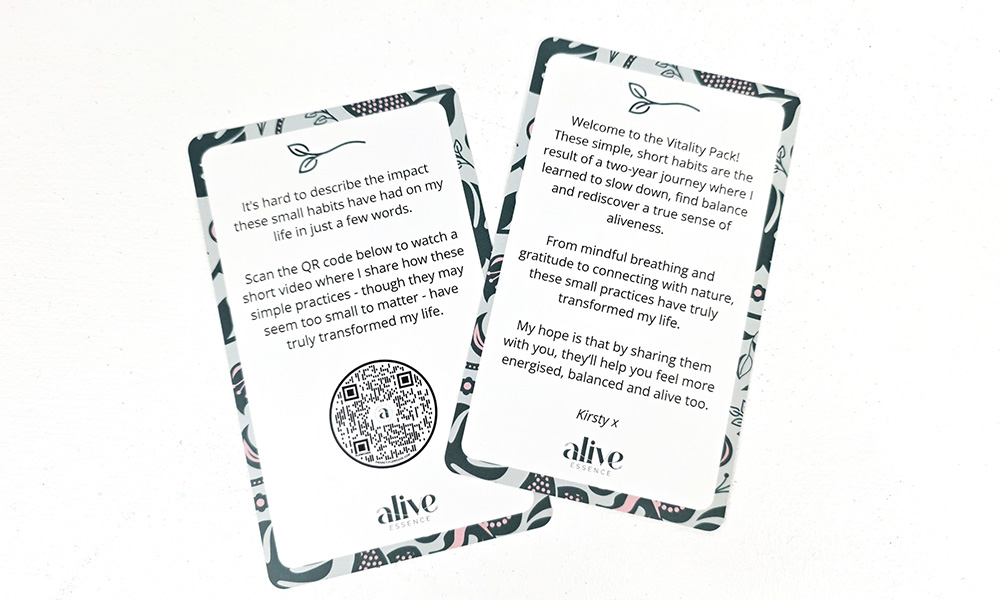
- The bit we love: The habits are genuinely doable – we’re talking 5-10 minutes, not hour-long meditation sessions. Plus, sticking them on the fridge meant the whole family got involved (unexpected bonus!).
- The bottom line: If you want a meaningful gift that helps someone hit pause without adding another app to ignore, this is a lovely shout. Perfect for Christmas stockings or a thoughtful Mother’s Day gift.
What Is The Vitality Deck?
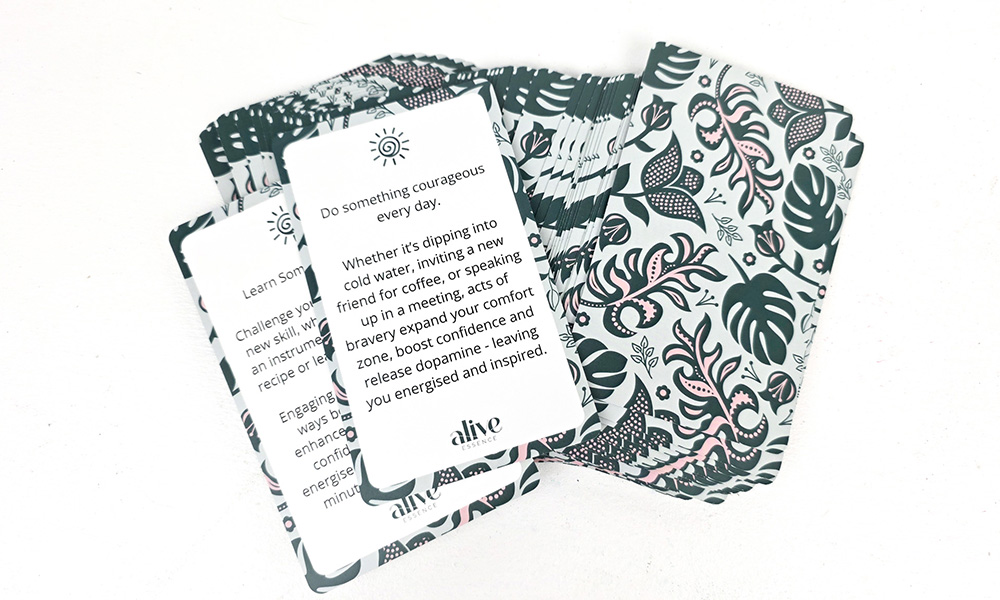
The Vitality Deck is a beautifully designed box of 52 cards from Alive Essence, each offering a simple daily habit backed by positive psychology. Think of it as your pocket-sized wellbeing coach, except it doesn’t need charging, won’t send you pushy notifications, and fits in a Christmas stocking.
Created by someone who’s been through burnout themselves, these aren’t fluffy affirmations or complicated routines. Each card gives you a clear, practical prompt (like standing barefoot on grass for five minutes, taking a music break, or practising a random act of kindness). The idea is to help time-poor parents (that’s most of us, right?) reconnect with what matters without needing to overhaul their entire life.
Who’s it for?
Honestly, anyone running on autopilot. Busy parents who give everything to everyone else. People who’ve downloaded wellness apps but never quite find the time to use them. Anyone looking for a thoughtful gift that says “I see you’re tired, here’s something simple that might help.”
Is The Vitality Deck Worth It?
Short answer: yes, if you actually want to use it.
At £27, it’s cheaper than a month of Headspace (£9.99/month) and costs about half the price of a yearly subscription to either Headspace or Calm (both £49.99/year). You own it forever. There’s no subscription creep, no auto-renewals you forget to cancel, and no guilt when you don’t open the app for three weeks.
But here’s the thing, this isn’t magic. The cards don’t make you do anything. If you’re someone who needs structure and reminders built into your phone, this might not stick. But if you’re tired of screens and want something tangible that actually nudges you to pause, it’s genuinely useful.
We think of it as an investment rather than a purchase. Break it down: that’s roughly 52p per habit. If even half of them become part of your routine, that’s pretty decent value for something that might actually make you feel more human again.
Plus, every purchase supports a mental health charity, which is a nice touch.
How We Used The Vitality Deck
Here’s what we actually did (because let’s be real about this).
Week one: We tried picking a card each morning. Sounds simple, right? Turned out to be a bit stressful. We’d stand there trying to decide which habit fitted into the day, factoring in school runs, work deadlines, and whether anyone had remembered to defrost dinner. Parent mode kicked in hard, and it felt like another thing to plan rather than something calming.
Week two onwards: We switched it up. Every Sunday, we picked 7-9 cards for the week and stuck them on the fridge. This made a real difference for us.
Because we’re in and out of the kitchen constantly, we’d see them every time we grabbed milk or searched for snacks. It meant we actually remembered to do something. Some days we’d pick based on how we felt – need energy? Hand massage with nice-smelling cream. Feeling frazzled? Watch the clouds for five minutes. Other days, we’d just grab whichever one called to us.
The unexpected bit? The kids started joining in. We hadn’t planned for that, but seeing the cards on the fridge meant our older ones would try them too. Walking barefoot on the grass became a family thing. The random acts of kindness card sparked some lovely moments.
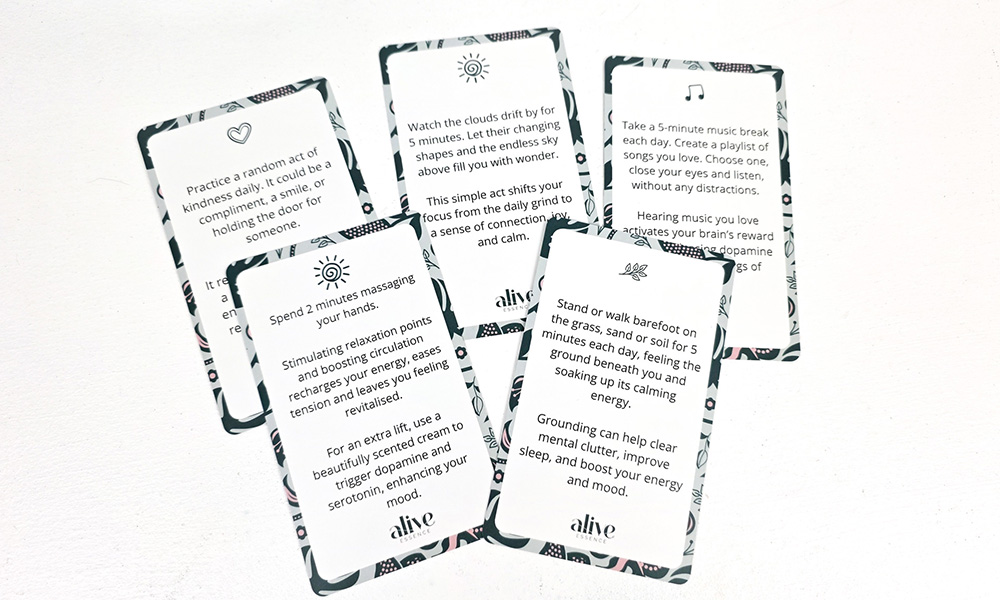
After a few weeks, we kept five favourites in permanent rotation and swapped out four others. Our core five:
- Stand barefoot on grass for 5 minutes – Sounds simple, feels surprisingly grounding (literally)
- 2-minute hand massage – Quick dopamine hit, especially with nice hand cream
- Random act of kindness – Made the kids more aware of being kind
- 5-minute music break – Close eyes, just listen, no scrolling
- Cloud watching for 5 minutes – Weirdly calming, even when you think you’re too busy
In our experience as a family who uses a lot of wellness apps, having something physical made all the difference. We weren’t unlocking phones (and then getting sucked into notifications), we were just… doing the thing.
What We Liked
- Actually doable habits – Everything takes 5-10 minutes max. No life overhauls required.
- Screen-free – Huge win. We used our phones less because we weren’t opening apps to remember what to do.
- Quality cards – Sturdy enough to survive being handled daily. Bigger than playing cards but not so big they’re awkward.
- Thoughtful design – Calming colours, clear font, not overly feminine. Feels premium without being fussy.
- Backed by science – Grounded in positive psychology, not just random feel-good fluff.
- Family-friendly – We didn’t expect the kids to get involved, but they did, and it was lovely.
- Supports mental health charities – Your purchase does some good beyond your own wellbeing.
- No subscription – Pay once, keep forever. No ongoing costs or auto-renewals.
What Could Be Better
- Instructions could be clearer – There’s a QR code for a welcome video, but we felt a bit left to figure out our own system. Some people will love that freedom; we’d have preferred clearer options (like “Option 1: Pick daily” or “Option 2: Plan weekly”).
- Not for everyone – If you need your phone to remind you of everything, physical cards might not work as well.
- Takes commitment – The cards don’t do the work for you. If you’re not motivated to try, they’ll sit in a drawer.
- Limited guidance – Some cards could use a bit more detail on how to do the habit effectively, especially for complete beginners.
At a Glance:
- Product Type: Wellness gift / Mental health tool
- Price: £27
- What You Get: 52 high-quality cards in a designed box
- Time Needed: 5-10 minutes per day
- Age Range: Adults (though older children can join in)
- Made In: Designed in Isle of Man, printed in UK
- Best For: Busy parents, anyone feeling burnt out, screen-free wellness
- Gift Occasions: Christmas stockings, Mother’s Day, Father’s Day, birthdays
- Supports: Mental health charities with every purchase
Frequently Asked Questions
How long does each habit take to complete? ▼
Most habits take between 5-10 minutes, which is honestly one of the best things about The Vitality Deck. There's no hour-long meditation requirement or complicated routine. Whether it's a quick hand massage, standing barefoot on grass, or watching clouds drift by, everything is designed to fit into real life. We found that even on our busiest days, we could manage at least one card.
Can children use The Vitality Deck too? ▼
The cards are designed for adults, but we were pleasantly surprised when our older kids got involved. Habits like random acts of kindness, cloud watching, and walking barefoot on grass worked brilliantly for the whole family. Younger children might need some guidance, but it's turned into a lovely way to encourage mindfulness without it feeling like a chore. For very young kids, you'd need to adapt the prompts.
How is The Vitality Deck different from wellness apps like Calm or Headspace? ▼
The biggest difference is that it's physical and screen-free. With apps like Calm or Headspace, you have to unlock your phone (hello, notifications and distractions), remember to open the app, and then actually follow through. With The Vitality Deck, the cards are just... there. We stuck ours on the fridge, so we saw them constantly. No notifications, no subscription fees, no guilt when you don't open it for weeks. It's a one-time purchase that you own forever, and for us, that made it easier to actually stick with.
Where can I buy The Vitality Deck? ▼
You can get The Vitality Deck directly from the Alive Essence website. It's also worth checking for any seasonal offers around Christmas, Mother's Day, or Father's Day. At £27, it's under that magic £30 threshold that makes it a thoughtful gift without feeling like a huge splurge.
What if I forget to use the cards? ▼
Honestly, that's where placement matters. When we tried keeping them in a drawer, we forgot about them. When we stuck them on the fridge, we couldn't ignore them. Find a spot you see multiple times a day - bathroom mirror, bedside table, wherever works. And if you miss a day (or three), no big deal. This isn't about perfection; it's about building habits when you can.
The Vitality Deck vs Digital Apps: Which Actually Works?
Right, let’s talk about the Vitality Deck vs digital apps like Headspace and Calm, because this was the big question for us.
Digital apps (Headspace, Calm):
- Subscription model (around £13-15/month)
- Require your phone (and the willpower not to check notifications)
- Offer guided meditations, sleep stories, structured courses
- Great for people who need audio guidance
- Easy to forget to open or let subscriptions auto-renew for months unused
The Vitality Deck:
- One-time payment of £27
- Completely screen-free
- Simple prompts you can do in 5-10 minutes
- Physical reminder (if you place it somewhere visible)
- Better for quick daily habits rather than longer guided sessions
Here’s what we found: while many people swear by wellness apps, having a physical card meant we actually remembered to do something without getting sucked into our phones. Opening Calm or Headspace requires you to actively choose wellness over Instagram, emails, or whatever else is pinging at you. With The Vitality Deck on the fridge, the choice was already made.
That said, if you love guided meditations or need audio to help you focus, apps still have their place. But for quick, practical daily habits that don’t require a screen? The cards won.
Our Verdict
The Vitality Deck isn’t going to change your life overnight, but it might just give you back those small moments that make life feel more manageable. After a few weeks of testing, we’ve kept it going – which says something, because we’re the family with three abandoned wellness apps.
Is it better than scrolling through wellness apps? For us, yes. The Vitality Deck vs digital apps debate comes down to this: do you want something that requires you to remember to open an app, or something that’s just there, gently nudging you to pause?
At £27, it’s a fair investment for 52 habits that might actually stick. It’s thoughtful enough for a Christmas gift, practical enough for a New Year reset, and meaningful enough for Mother’s Day or Father’s Day. The fact that it supports mental health charities is the cherry on top.
If you’re tired of running on autopilot and want something simple, screen-free, and genuinely useful, this is worth a look. Just stick them somewhere you’ll actually see them…. trust us on that one.
Want more wellness product reviews? Check out our full wellbeing products guide for other practical finds that help families feel more balanced.